

Key Takeaways:
- Aggressive, one-size-fits-all collection tactics can damage patient loyalty, referrals, and your practice’s online reputation.
- Clear cost estimates and written financial policies help prevent billing confusion before treatment begins.
- Following up within two to three weeks of a missed payment improves the likelihood of resolving the balance.
- In-house payment plans and third-party financing give patients manageable ways to pay for dental care.
- Online portals, text-to-pay links, and autopay remove practical barriers that can delay payment.
- Automated reminders and aging reports help staff identify accounts that require personal attention or professional intervention.
- A dental collection partner should combine regulatory compliance with respectful communication that protects patient relationships.
Every dental practice eventually runs into the same uncomfortable math: some patients don’t pay, and going after that money the wrong way can cost more than the balance you’re collecting. A single bad collection experience can turn a decade-long patient into a one-star review and a lost referral network, and in a field built almost entirely on trust and word of mouth, that kind of damage is hard to undo.
The practices that protect their cash flow without wrecking their reputation tend to share a few habits in common, and none of them involve getting tougher on patients.
When Collection Tactics Cost More Than They Recover
Blanket collection letters (unlike proper collection letters), repeated calls from an unfamiliar voice, and quick escalation to a generic agency treat every patient the same way, whether they missed one payment or have ignored six months of statements. That approach ignores something dental practices know better than almost any other type of business: these are often long-term relationships, sometimes spanning entire families and multiple generations of patients.
The Trust Problem With One-Size-Fits-All Escalation
Traditional collection tactics were built for anonymous debt, not for the person who’s been coming to the same office since childhood. When a practice hands an account to a hardline agency that doesn’t understand nuance, it signals that the relationship ended the moment money was owed. In other words, patients notice, and so does everyone they talk to. A parent who feels shamed over a balance is unlikely to bring their kids back.
An aggressive collection call doesn’t just risk one patient. In a local market, word travels through parent groups, at the watercooler, and online reviews faster than most practices are prepared for. A single public complaint about being harassed over a bill can outweigh years of five-star care, and it tends to stick around in search results long after the balance is resolved.
Catching Balances Before They Become a Collection Problem
Most overdue accounts don’t start with a patient refusing to pay, but with confusion about what’s owed, when it’s due, and what happens next. Solving that confusion early helps protect more revenue than any collection tactic applied later.
Setting Expectations Before a Patient Gets into the Chair
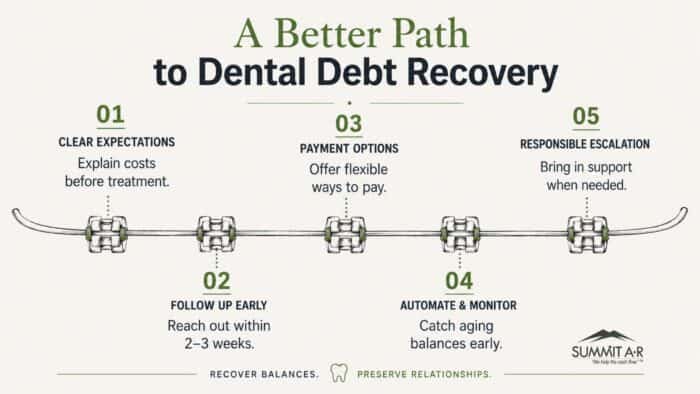
Verifying insurance coverage and presenting a written treatment plan with real cost estimates before a procedure gives patients a chance to plan, ask questions, or request a payment arrangement while they still feel in control of the decision. A signed financial policy at intake, especially before larger procedures like crowns, implants, or orthodontics, removes a lot of the “I didn’t know it would cost that much” disputes that later turn into unpaid balances.
Following Up While the Balance Is Still Fresh
The first follow-up after a missed payment matters more than practices that fall behind on receivables tend to give it credit for. A friendly reminder call or text within the first two to three weeks, while the appointment and the reason for the charge are still fresh in a patient’s mind, resolves far more balances than a form letter sent sixty days later. Waiting until an account is severely past due doesn’t just make the money harder to collect. It also means the first real conversation a patient has about their bill happens after they’re already annoyed, embarrassed, or avoiding calls altogether.
Keeping Patients With Flexible Payment Options
Most patients who fall behind aren’t refusing to pay. They’re stretched, and a pay-in-full-or-else option only pushes them toward a competitor or toward ignoring your practice entirely. Giving patients a reasonable way to say yes keeps both the relationship and the revenue intact.
In-House Plans and Third-Party Financing
A short in-house payment plan works well for smaller balances and keeps the conversation entirely between the practice and the patient, which many patients prefer over involving a third party at all. For larger treatment costs, third-party financing options let patients spread out payments without turning the practice into a lender, and they can often get a patient to say yes to needed treatment they might otherwise decline or delay indefinitely. Offering both means fewer patients hit a dead end when they can’t pay in full.
Removing Friction From the Payment Itself
Even a patient who wants to pay will stall if the process is inconvenient. Text-to-pay links, an online patient portal, and the option to set up autopay for a plan remove the small barriers.
How Automation Can Help
Automation isn’t about replacing the personal touch that makes dental collections work, but about freeing staff from repetitive follow-up so the time they do spend on the phone goes toward the accounts that actually need a human conversation.
Reminders, Statements, and Aging Reports
Most practice management software can send automatic appointment reminders, billing statements, and gentle nudges as a balance ages, without front desk staff having to complete each task by hand. That matters in an office where the same one or two people are already juggling scheduling, insurance verification, and patient check-in. Regular aging reports also flag which balances are drifting toward the ninety-day mark, giving your practice a chance to intervene while there’s still a reasonable shot at collecting in full.
Knowing When an Account Needs More Than a Reminder
Automated reminders are effective for the majority of patients who just need a nudge. But once an account passes a certain age or a patient stops responding altogether, more automated messages won’t change the outcome. That’s the point where handing the account to staff for a direct conversation, or to a professional agency experienced with dental collections, recovers far more than any other type of recovery attempt.
Staying Legally Compliant While You Collect
Dental debt also sits at the intersection of general collection law and patient privacy rules, which gives practices more exposure than a typical business chasing an unpaid invoice.
Privacy Limits on What Can Be Shared
Under HIPAA, dental offices are legally permitted to send unpaid patient bills to collection agencies because debt collection falls under permitted “payment” operations, which means billing details can typically be shared with a collection partner as needed to pursue payment.
But clinical information about a patient’s treatment generally can’t be disclosed beyond what’s necessary for that purpose. Practices that hand accounts to a collection partner should confirm that partner understands this distinction and has safeguards in place to respect patient privacy (and dignity). Also, check out this article by the American Association of Endodontists on the most common HIPAA violations committed by dental offices.

Fair Collection Practices Apply
The Fair Debt Collection Practices Act (FDCPA) doesn’t apply to dental offices collecting their own in-house bills. But dental practices still must follow strict federal and state guidelines, avoid deceptive medical billing practices, and ensure FDCPA compliance when outsourcing accounts to external collection agencies
Rules that limit when and how often a debtor can be contacted, and that require clear written notice of a debt, generally extend to healthcare balances as well. Front desk staff making informal calls between patients often aren’t thinking about contact-frequency limits or required disclosures, simply because collections isn’t their job.
Because these rules vary by state and continue to evolve, it’s worth having a professional familiar with current requirements review a practice’s collection process rather than relying on assumptions about what’s allowed, especially before an in-house effort escalates into something with legal exposure.
Turning These Pieces Into a System
None of these elements tends to work efficiently in isolation. A practice that automates reminders but never sets clear expectations upfront will still see confused, frustrated patients. One that offers flexible payment plans but waits 90 days to send a reminder will have already lost the goodwill those plans were meant to preserve.
Successful dental debt recovery protects both revenue and relationships, treating billing communication, payment flexibility, automation, and compliance as parts of the same ongoing process, not separate fixes applied only when an account is already in trouble.
That system will still leave some accounts unresolved, and that’s normal. Even well-run practices write off a portion of their receivables every year. What separates a manageable amount of bad debt from a real cash flow problem is usually how quickly the practice recognizes an account isn’t going to resolve itself internally.
For the accounts that make it past all of that anyway, having a collection partner who understands the dental and healthcare collections space, and who treats patients with the same respect the practice does, makes the difference between recovering the balance and losing the patient for good. Call us for a free consultation to find out more.
Frequently Asked Dental Debt Collection Questions
How can a dental practice collect unpaid balances without losing patients?
Use clear cost estimates, written financial policies, and prompt follow-up before balances become severely overdue. Offer practical payment options and keep communication respectful and specific to the patient’s situation. When internal efforts stop working, refer the account to a collection partner experienced in dental debt and patient-sensitive recovery.
When should a dental practice send an unpaid account to collections?
A practical handoff point is when the balance has aged beyond your internal timeline, repeated reminders have failed, or the patient has stopped responding. Many practices review accounts as they approach 90 days past due. Set a consistent policy, document every contact attempt, and account for applicable federal and state requirements.
What is the best way to prevent overdue dental bills?
Explain estimated patient costs before treatment, verify insurance, obtain acknowledgment of the financial policy, and send the first reminder within two to three weeks of a missed payment. Easy payment methods, accurate statements, and early conversations resolve confusion while the treatment and charge are still fresh in the patient’s mind.
Should dental practices offer payment plans?
Yes. Short in-house plans can help patients manage smaller balances, while third-party financing may suit higher treatment costs. Put terms in writing, make payment dates and fees clear, and apply the policy consistently. Options such as autopay, online portals, and text-to-pay links can also reduce missed installments.
Do HIPAA and the FDCPA apply to dental debt collection?
HIPAA permits covered dental practices to use collection agencies because debt collection qualifies as a payment activity. Practices and their business associates should limit protected health information to what is reasonably necessary. The FDCPA generally governs third-party debt collectors, while state laws and other federal rules may also affect in-house activity. HHS, FTC
What should a dental practice look for in a collection agency?
Look for dental or healthcare collection experience, strong privacy safeguards, current federal and state compliance knowledge, transparent fees, and respectful communication standards. Ask how the agency handles disputes, documents patient contacts, trains collectors, and protects your reputation. The right partner should recover overdue balances without treating patients like anonymous account numbers.