Recover What You're Owed. Protect Your Reputation.
Employee reimbursement recovery refers to the process of recovering wage overpayments or funds previously advanced to an employee. These may include tuition assistance, relocation costs, commissions, travel expenses, training, equipment, or company-paid benefits that must be repaid if employment ends early or other policy terms are not met.
There are no upfront fees – we are paid only from the amounts we recover.

The Only Employee Debt Recovery Agency with a PHD
Summit has been helping companies like yours recover employee reimbursement debt for over 30 years. We’ve handled it all, including:
- Overpaid salary
- Tuition/continuing education reimbursement
- Unauthorized travel expenses
- Uniform fees
- Commission recalls
- Relocation expenses related to early termination
- Many other unauthorized expense items
Guided by our “PHD Philosophy” (Preserve Human Dignity), our licensed debt resolution professionals take the high road to recovery.
Our recovery rates are double the national average.
There is a way to recover what is owed to your company while preserving dignity, professionalism, and your organization’s reputation.
For decades, HR executives and directors at Fortune 500 companies have trusted Summit A•R to protect both their budgets and their reputations. We provide professional recovery solutions backed by a dedicated team specializing in employee reimbursement recovery.
Our respectful communication style and process are compliant with all state and federal guidelines. Summit A•R maintains an impeccable nationwide compliance record and a zero-tolerance policy for compliance violations.

How Our Employee Reimbursement Recovery Work
For more than 30 years, we have developed and refined a proprietary, cost-effective recovery process designed to maximize results while protecting our clients’ brands and treating current and former employees with dignity and respect. Here’s an overview of how our Employee Reimbursement Recovery process works:

What Our Clients Say About Working With Us



My negative experience was with Sixt; Summit made the resolution process straightforward and pleasant. I appreciate the excellent customer service.



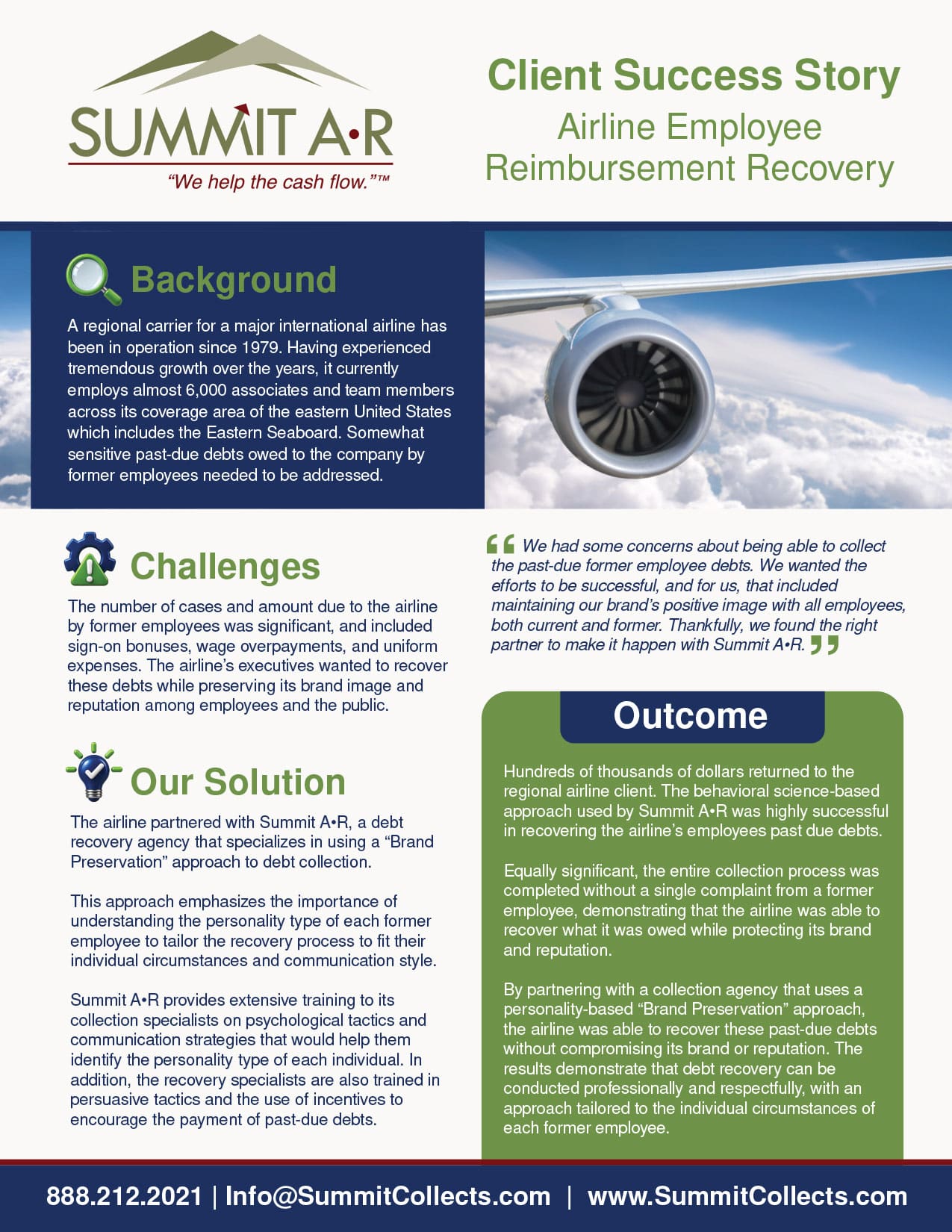
Airline Client Success Story
Additional Services That Support Employee Debt Recovery
Recover What You’re Owed. Protect you Reputation.
With more than 30 years of experience and a reputation for ethical, professional recovery, Summit A•R helps organizations resolve employee-related debts efficiently, respectfully, and successfully. There are no upfront fees, just a proven process focused on results and protecting your company’s reputation.

Frequently Asked Questions about Employee Reimbursement Recovery Services
Employee reimbursement refers to situations where a company seeks repayment for wage overpayment or funds previously advanced to an employee for business-related purposes. This can include tuition assistance, relocation costs, commissions, travel expenses, or company-paid benefits that must be repaid if employment ends early or policy terms are not met.
Yes, companies can legally recover money owed by a former employee when a clear agreement, policy, or contract establishes the obligation. Recovery typically involves written documentation, professional outreach, and structured repayment arrangements. If voluntary repayment is not successful, businesses may pursue formal debt collection or legal remedies consistent with applicable laws.
The most effective approach to employee reimbursement recovery begins with clear documentation, written repayment agreements, and respectful communication. Many organizations use professional collection services to manage outreach, maintain compliance, and encourage voluntary repayment. Early engagement and consistent follow-up significantly improve recovery outcomes while reducing disputes.
Wage deductions for reimbursement debt are often restricted and typically require the employee’s written consent or must comply with state and federal wage laws. Many jurisdictions limit how and when employers can withhold wages, which is why companies often rely on structured repayment plans or professional debt recovery services instead.
If a former employee refuses to repay a documented reimbursement obligation, the balance may be referred to a professional collection agency or pursued through legal channels when appropriate. These processes encourage repayment while ensuring compliance with consumer protection laws and maintaining proper documentation throughout the recovery effort.